Events

AVERT regularly hosts events and webinars featuring the latest research on topics related to violent extremism, terrorism, radicalisation and countering violent extremism

Upcoming events

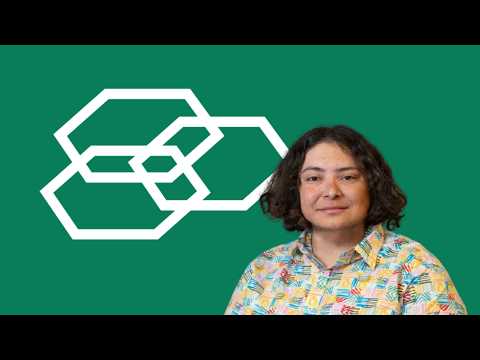
Keiran Hardy

Associate Professor at Griffith University

Lydia Khalil

Senior Research Fellow, Deakin University
Program Director, Lowy Institute

Online Event

Zoom

Tuesday, 28 April 2026

11:00 – 12:00 AEST

The Sovereign Citizen Movement: Global and Local Threats
Sovereign citizens are often dismissed as conspiratorial eccentrics who operate on the fringes of society. However, at its core, the movement rejects the legitimacy of government authority and the democratic rule of law. Sovereign citizens do not believe they are subject to the same laws as everyone else. They rely on fantastical conspiracy beliefs and pseudo-legal arguments to justify this rejection of society.  

This fundamental rejection of democratic norms means the sovereign citizen movement is not simply a local nuisance: it is a growing national security challenge for many countries around the world. Sovereign citizens have promoted delegitimising narratives against democracies, created alternative structures of authority, committed acts of political violence, fomented civil unrest, engaged in violent confrontations with law enforcement, and threatened elected officials and high office holders. 

The current expansion of sovereign citizen beliefs is occurring during a period of growing inequality, democratic decline and global unrest. In this webinar, Lydia Khalil and Keiran Hardy explore the threats posed by sovereign citizens - both globally and locally - and how law enforcement, governments and society can best respond. 

Dr. Keiran Hardy is an Associate Professor in the School of Criminology and Criminal Justice at Griffith University and a member of the Griffith Criminology Institute. He is a recognised expert in counter-terrorism and national security law and he contributes regularly to the media and public inquiries. He is the author of Law in Australian Society: An Introduction to Principles and Process (Routledge, 2024, 2nd ed.) and is currently undertaking a 3-year ARC Discovery Project on conspiracy extremism, focusing on sovereign citizen beliefs and behaviours, pseudolaw, and the impact of conspiracy extremism on families and communities.

Lydia Khalil is a Senior Research Fellow at the Alfred Deakin Institute and a Project Director at the Lowy Institute. In her capacity at Deakin University, in addition to her research focus, she also served as Co-Convenor of the AVERT (Addressing Violent Extremism and Radicalisation to Terrorism) Research Network and as liaison to the Research and Evaluation Working Group (REWG) of CVESC. As part of her work with the Lowy Institute, Lydia manages the Transnational Challenges Program and Digital Threats to Democracy Project.

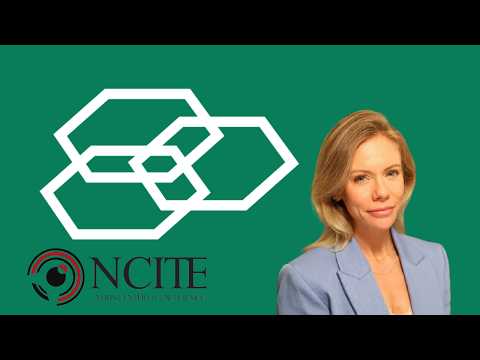
Bettina Rottweiler

Associate Research Professor at the National Counterterrorism Innovation, Technology, and Education Center (NCITE)

Online Event

Zoom

Tuesday, 5 May 2026, 6:00 – 7:00 PM CDT

Wednesday, 6 May 2026, 09.00 – 10.00 AM AEDT

Register here

Introducing the Nihilistic Violent Extremism (NVE) Database: Examining Life-Course Factors, Mobilization Indicators, Motivational Drivers and Patterns of Harm

Nihilistic violent extremist (NVE) communities such as 764, CVLT, and No Lives Matter represent a rapidly evolving hybrid threat. Actors within these networks often display fluid motivations and encourage and facilitate a broad spectrum of harms, blurring the boundaries between violent extremism, organized crime, and child sexual abuse. Those involved are often children or young adults and frequently target vulnerable individuals, including minors and young people with mental health needs. Victims are manipulated, coerced, or exploited into engaging in escalating harmful behavior and, in some cases, into becoming perpetrators themselves.

Despite growing concern, little empirical evidence exists on who is vulnerable to involvement in these networks, what shapes their trajectories, and how mobilization and escalation occur. This webinar introduces the Nihilistic Violent Extremism Database, a new international, live, and continuously updated database of more than 80 individuals charged with, convicted of, or otherwise affiliated with NVE groups. Based on systematic open-source research, several thousand U.S. federal court records, media reporting, and other publicly available materials, the database captures a broad range of NVE-related offences, including child sexual abuse material offenses, swatting, incitement to self-harm or suicide, other technology-facilitated harms, and offline violence.

Drawing on this database, the webinar provides a systematic analysis of the life-course factors, mobilization indicators, and patterns of harm associated with nihilistic violent extremists. It examines key background characteristics, including adverse childhood experiences, mental health conditions, major life events, and motivational drivers, and explores how different risk factors and observable behaviors may be linked to different forms of offending. In doing so, the analysis helps establish a much-needed evidence base for understanding individuals involved in nihilistic violent extremism. The findings are directly relevant to practitioners, policymakers, and researchers seeking to strengthen prevention, early intervention, risk assessment, and response strategies in relation to this evolving threat.

Dr Bettina Rottweiler is an Associate Research Professor at the National Counterterrorism Innovation, Technology, and Education Center (NCITE), where she leads the research portfolio on youth mobilization to violent extremism, including nihilistic violent extremism (NVE). Her research focuses on life-course factors, mobilization indicators, and the pathways through which young people become involved in violent extremism. She is also a Research Fellow on the Zurich Project on the Social Development from Childhood to Adulthood, where she uses longitudinal data to identify developmental risk and protective factors associated with support for violent extremism among children and adolescents. Her work focuses on producing scientific evidence that can directly inform policy and practice, and she collaborates closely with international countering violent extremism practitioner teams. She has published more than 30 peer-reviewed articles in leading journals. Her research has been funded by the European Union, the UK Home Office, CREST, the United Nations Office of Counter-Terrorism (UNOCT), UK Counter Terrorism Policing, the National Crime Agency, UK Research and Innovation, and Public Safety Canada.

Recent events

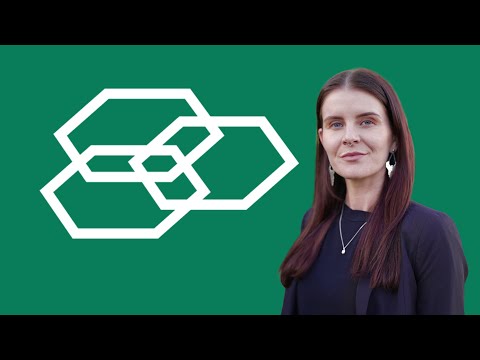
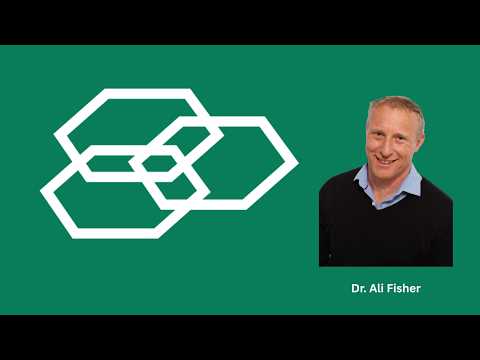
Ali Fisher

Fellow at ITSTIME research centre and Lecturer at the Università Cattolica del Sacro Cuore in Milan

Online Event

Jihadism and the Bondi attack: Disrupting IS and AQ strategy in 2026

Following the December 2025 terrorist attack in Bondi, those tasked with tackling the threat from the Islamic State and Al Qaeda face challenges in assessing and disrupting online Salafi-Jihadi communications. This webinar will focus on what Salafi-Jihadi groups such as IS and AQ have been communicating to their target audience since the Bondi attack, in particular, how they are distributing that content online and the role AI is playing.

In this presentation, we will attempt to understand and analyse IS and AQ content through Jihadi eyes. This requires moving away from a Western lens that has sometimes assumed these groups have a single narrative. Despite premature claims about the supposed defeat of IS, AQ and the Taliban, all three continue to operate and to propagandise complex online messaging to target audiences. As well as exploring elements of this strategy, this webinar will consider options for the disruption of post-Bondi jihadi messaging.

Dr Ali Fisher is Explorer of Extreme Realms at Human Cognition, Fellow at ITSTIME research centre, and Lecturer at the Università Cattolica del Sacro Cuore in Milan.

He is an advisor, strategist, and author who delivers strategic insight into complex information ecosystems, often containing extreme or illegal content. With a dual specialism in Strategic Communication and Data Science, he has worked on Strategic Communication projects for European and US Government Departments specifically focused on achieving and measuring influence.’

Using large-scale social network analysis, he has identified factors that help organisations build or disrupt networks of influence and impact the flow of information through a community. In addition to publishing the largest known network graph of the Dark Web, these techniques have been used across a diverse range of fields, including Strategic Communication, Counter Terrorism, and Child Protection.

Rahel Kellich

PhD Candidate in Educational and Religious Science at Bielefeld University and Vrije Universiteit Amsterdam

Online Event

Education in Christian Fundamentalism: Current Developments and Challenges for Civic Education

This webinar will explore how upbringing and socialisation within Christian fundamentalist communities can influence the educational and social development of children and adolescents. While research on radicalisation has often focused on Islamist contexts, the impact of Christian fundamentalism—particularly in Europe—has received far less attention. Using Germany as an example, this presentation will outline key features of contemporary Christian fundamentalist groups and examine how their forms of authority and belief systems—such as exclusive truth claims, anti-pluralist worldviews, and binary thinking—shape young people’s views on autonomy, civic participation, and diversity.

The webinar will also highlight the growing international reach of Christian fundamentalist and evangelical networks, including their online presence through “Christfluencers” and algorithmic environments that circulate fundamentalist ideas across digital spaces. These examples will show how such worldviews adapt to modern media while maintaining core ideological frameworks.

By comparing these developments with the aims of civic education, this presentation will invite discussion on how educators can strengthen democratic values, autonomy, and critical reflection among young people.

Rahel Sarai Kellich is a doctoral researcher in Educational and Religious Science at Bielefeld University and Vrije Universiteit Amsterdam. Her dissertation focuses on religious fundamentalism, especially Christian fundamentalism and extremism, emphasizing the role of upbringing and education in democratic learning within these contexts. Her academic background includes studies at the University of Gothenburg and the University of Cologne, culminating in a master’s degree in educational science from TU Dortmund. Her current doctoral research is funded by the Heinrich Böll Foundation. She has professional experience in extremism prevention in both Jordan and Germany, the latter especially involving counselling and educational outreach with young people affected by Islamist radicalisation and their families. Her previous position at the German parliament highlighted the value of closer collaboration between academic research and political institutions, particularly in areas concerning education, extremism prevention, and the strengthening of democratic participation.

Overall, her trajectory reflects an interdisciplinary engagement with religion, education, and extremism prevention.

Event recordings

2026

AVERT Webinar with Dr Ali Fisher—AVERT Webinar - Jihadism and the Bondi attack: Disrupting IS and AQ strategy in 2026

2025

AVERT Webinar with Dr Rik Peels - Cognitive and Behavioral Radicalization: An Explanatory Split

AVERT Webinar with Dr Joel Busher - Violence escalation and inhibition during far-right protest waves

AVERT Webinar with Dr Emma Belton - Public Release of the Profiles of Individual Radicalisation in Australia (PIRA) Database

AVERT Hybrid Event - 2025 Global Terrorism Index Launch

AVERT Webinar with Dr Julie Chernov Hwang - The Disbanding of Jemaah Islamiyah

AVERT Webinar with Dr Arie Perliger - Exploring the Religious Dimensions of American Far-Right Extremist Discourse

AVERT Webinar - Emerging Global Perspectives on Preventing and Countering Violent Extremism

Rethinking religion and radicalisation: The role(s) of religion in far-right extremist movements

AVERT Webinar with Dr Nell Bennett - The Bureaucracy of Violence: Organisational Survival and the Challenge of Disengagement

AVERT Webinar with Dr Keiran Hardy - How (Not) to Argue with a Sovereign Citizen

AVERT Webinar with Dr Imogen Richards - The Aesthetic Politics of Far-right Environmentalism
AVERT Webinar with Rahel Kellich - Education in Christian Fundamentalism: Current Developments and Challenges for Civic Education

2024

AVERT Webinar with Dr Mario Peucker - Understanding and Countering the Rise of the Far-Right

AVERT Webinar with Dr Suraj Lakhani - The nexus between videogaming and violent extremism

AVERT Webinar with Dr Aaron Y Zelin - The Evolution of the Islamic State

AVERT Webinar with Dr Julia Ebner - Is There a Language of Terrorists?

AVERT Webinar with Dr Imogen Richards - The Far Right and the Environment in Australia.

AVERT Webinar with Professor John Horgan - Terrorist Minds

AVERT Webinar - Research on Radicalisation Countering Radicalisation: Where have we got to and ways forward.

AVERT Webinar with Jade Hutchinson - “The Far-Right Online Ecosystem”: How a Network of Platforms and Devices Shape Far-Right Violent Extremism

AVERT Webinar with Dr Lauren Moulds and John Young - Rethinking CVE Interventions: a needs based approach to supporting extremists and terrorist offenders

AVERT Webinar with Professor Stuart Macdonald - “Outlinks”: Violent Jihadist Online Propaganda Dissemination Strategies

2023

AVERT Webinar with Professor Daniel Byman - The October 7th Attacks: Hamas Goals, Israeli Response and Global Impacts

AVERT Webinar with Professor Sébastien Brouillette-Alarie - Systematic review of the reliability and validity of risk tools for violent radicalization: Is the evidence base solid?

AVERT Webinar with Associate Professor David Malet - Ukraine Foreign Fighters: Volunteers on the Right Side or the Far-Right’s ISIS?

AVERT Webinar with Emma Belton - Understanding the progression to violence: Background characteristics and risk factors for radicalisation to violent extremism

AVERT Webinar with Dr Marc-André Argentino - QAnon as a New Religious Movement and its Implications for Violent Extremism

AVERT Webinar with Dr Vivian Gerrand - Understanding conspiritual radicalisation and militant wellness movements: harnessing alternative health capital?

AVERT Webinar with Professor Joel Busher - Pathways Towards and Away From Violence During Waves of Far Right Protest

AVERT Webinar with Professor Paul Thomas - The State of British Preventing and Countering Violent Extremism (P/CVE)

2022

AVERT Webinar with Dr Imogen Richards - Far Right Identitarianism and the Great Replacement Conspiracy in Australia

AVERT Webinar with Professor Jan-Willem van Prooijen - Belief in Conspiracy Theories and Extremism

AVERT Webinar with Annemarie van de Weert - The Role of Subjectivity in the Early Detection of Violent Extremism Among Youth

AVERT Webinar with Professor Maura Conway - Online Extremism and Terrorism: What to Watch for in 2022

2021

TSAS AVERT Religion and the Far Right 2

AVERT Webinar: Rethinking US Efforts on Counterterrorism: Toward a Sustainable Plan 20 Years after 9/11

AVERT Webinar - Afghanistan and the Return of the Taliban

AVERT Webinar with Associate Professor Tahir Abbas - Islamophobia, Reciprocal Radicalisation and CVE

Ryan Scrivens - Online Behaviour of Right Wing Extremists

AVERT Webinar with Professor Winnifred Louis: When Deradicalisation Goes Wrong?

Joint AVERT-TSAS Webinar: Religion and the Far Right

AVERT Webinar: Critical Perspectives on CVE and PVE

AVERT Speaker Series: Dr Shiri Krebs on “Counterterrorism & Predictive Technologies”

2020

AVERT International Speaker Series: Maura Conway

AVERT International Speaker Series: John Horgan

AVERT International Speaker Series: Dr Haroro J. Ingram and Dr Craig Whiteside

AVERT Webinar with Dr Helen Young

AVERT International Speaker Series: John Morrison on “Talking Stagnation”